

How the Amish Keep Cool

Please join us for the monthly Iowa Writers’ Collaborative’s Office Lounge. It’s today, the last Friday of every month except for November and December. Noon CDT. Please join members of the Collaborative and other subscribers for conversation. It’s your chance to ask questions of all of us. Here is the link.
“Electrolytes,” my Amish neighbors told me. “You need electrolytes.”
It’s been hot. Sweat trickling through your seed cap and into your eyes—kind of hot. Some people waltz easily through the heat, even thrive on it.
“I love the heat,” some of my friends say.
“Even the humidity?”
They nod their heads—no big deal—then close up all the windows in their houses in the morning and sit there without a single molecule of air stirring. They claim that they are keeping the cool air in, the hot air outside.
By four o’clock in the afternoon, the sun is beaming through their windows on the west side of their house. “How is this air cooler than outside?” I ask, nauseated, dizzy, about to black out.
My Amish neighbors also take the heat in stride. Down the road they go in open carts, sweat rolling off the backs of their horses and ponies. The Amish ride the gravel roads, sitting there serene, in long pants and skirts, heads covered with straw hats and bonnets, enveloped in dust.
“We’re used to it,” they tell me.
I’ve lived in this climate for about 70 years, and I’m still not used to it.
Their secret, the Amish claim, is electrolytes.
“We take a spoonful of this in water,” the Kauffmans told me, before they go to work. They showed me a large jar of powder.
The Kauffmans had been putting up hay and walking beans. Blazingly hot, shadeless fieldwork.
“We worked four hours this morning, but I came in, drank a scoop of this, and I could have gone on for at least two more hours,” Martha told me. “I like mango.”
“We like mixed berry,” the boys told me.
“Last time we were there, mango was almost sold out.”
“But there was plenty of lemon lime and coconut. Nobody likes the coconut.”
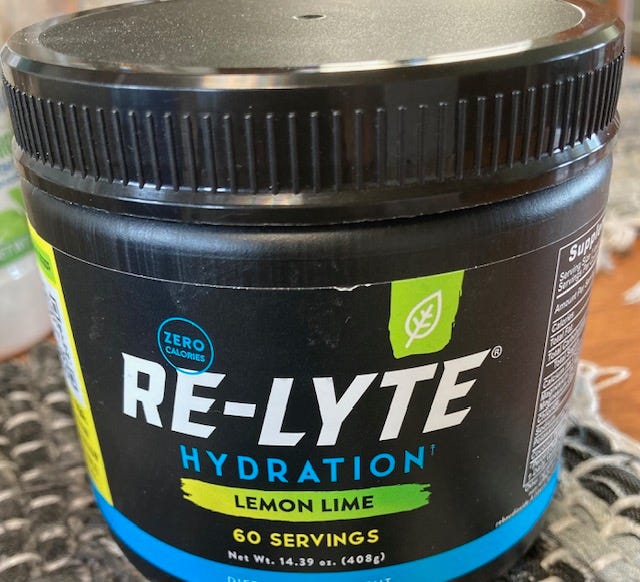
Apparently, you can get electrolytes in many flavors. They carry the product at the local Amish feed and seed store.
The days dragged on, one hotter than the last. I’ve had central air conditioning for less than 10 years. I always got by with a box air conditioner hanging out the window of one room of my house. But that unit was so expensive to run and made so much noise, that I only used it on the unbearable days.
Then I realized that climate change was only going to make the summers hotter and wetter. I splurged, and put a heat pump in my house. It’s taken a while to regain my investment, but I never thought that a heating and cooling system was going to make me so happy.
I sat here one night in the heat wave that had morphed into a stagnant heat dome with a soaring heat index. Thunderstorms with flash floods, tornadoes and derechos were predicted. The high humidity was blamed on corn sweat or evapotranspiration. All fairly new meteorological words that made you feel more miserable.
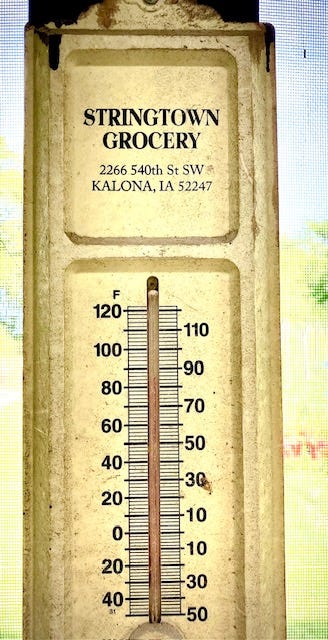
The temperature read 90 degrees at 7 o’clock p.m. I was cool sitting inside, offering up a prayer to St. Medard, the patron saint of weather, for protection from bad storms, heavy rain, and natural disasters. But I couldn’t help but think of my neighbors who were coping without any air conditioning. I started to think of all the ways my family coped when I was a child before anyone had air conditioning in their homes.
We got up early and did anything that took any exertion in the morning while it was relatively cool. Gardening, farming, laundry, and various other chores were all done before the day heated up.
Cooking and baking were kept to a minimum, without heating up the house. Canning was done in an outside summer kitchen, grilling on a barbecue. We ate lighter food, raw fruits and vegetables that didn’t need to be cooked.
Inside, large attic and window fans kept the hot air blowing out.
We’d run through a sprinkler, swim in a pool, a farm pond, or even jump into a creek. When we could afford it, we’d all go to the movies, the only place that had guaranteed air conditioning.
When we came out of the movie, we might go for a ride in the car in the country, the windows all rolled down, feeling the rush of air on our hot faces.
At night, we slept on sleeping porches or outside in tents. Or, we moved underground, shedding as many clothes as we dared, taking up residence in the basement, where it was considerably cooler. I remember once I came home from school on a blistering hot day only to find my mother folding laundry in the basement in nothing but her pants and bra.
The Amish seemed to glide through, using many of these solutions, but I knew that they still had to be struggling. They have to be so hot, I thought. I invited them to come to my place to cool down, have some ice cream. But they declined.
“We’re used to it,” they said.
Until the heat got really, really bad.
“Wow, it really does feel good in here,” they said. “How does a heat pump work?”
I tried to explain, but my brain could only convey so much. “I’ll print off a diagram of the pump. There has to be a way the Amish could adapt it.”
“There has to be,” Mahlon echoed.
In the meantime, I thought of an idea that my parents told me they had used during the Depression when it was notoriously 105 degrees for 5 days straight.
“Look, I don’t know how well this works,” I told the Kauffmans one day, but my family used to blow a fan across a huge block of ice and get some relief. They claimed you could cool down a whole room that way.”
The Kauffmans burst out laughing.
“I know, I know, I laughed, too, when I first heard about it.”
I went home and pulled up some You Tube videos of a man freezing water in large bottles, then tying them onto the metal fan safety guard. He took the temperature of the room before he turned on the fan, and within an hour, the air had dropped ten degrees.
I took my iPad back to the Kauffman’s and showed them the design. The children circled around the video, their heads bent over the screen, studying it intently. A huge fan whirled away in their kitchen, running on a cord that went out the door to a generator. The children memorized all the details from the video. Put some salt in the bottles before freezing to make the ice last longer. Hang the bottles upside down and attach them to the fan with zip ties. Got it.
I stopped by the Kauffman’s a few days later. The place was sweltering.
“Mmmm, no air conditioning here,” I said.
“We rigged it up in the bedroom,” Leah said.
“And it definitely cooled it down,” Annie said. “It did.”
“But not enough?
The Kauffmans shrugged their shoulders in unison.
“Maybe you have to run it for several hours before you see a difference.”
“Maybe. . .Did you get the electrolytes?”
“Not yet,” I said, then hopped in the car, heading for the feed and seed store to buy a jar of lemon lime.
I am pleased to be a member of the Iowa Writers Collaborative. Keep up with our writing through the Sunday and Wednesday Round-ups. Terrific stuff.

Mary, so true. "We're used to it." reminds me that my advanced physiology instructor told us, "you'll never get used to the heat sitting under a tree drinking beer." You have to work in it.
Electrolyte tips from my village development experience;
Sodium, sugar, and potassium are the main active ingredients.
Homemade electrolyte drink (from the handbook “Where There Is No Doctor”, a village health care handbook:
1 litre of water, 2 tbsp sugar or honey, ¼ tsp salt, ¼ tsp baking soda (or substitute another 1/4 tsp salt) , a good splash of lemon or orange juice, or half banana. The drink should not be saltier than tears. If you add the baking soda after the lemon juice, it fizzes and is more fun.
Sometimes I just make a cup of weak tea and add a proportionate amount of sugar, salt, and lemon juice.
Or Gatorade. I buy the powdered Gatorade and mix it at home.